Gymkhana by car (motorkhana, autocross, autotesting)
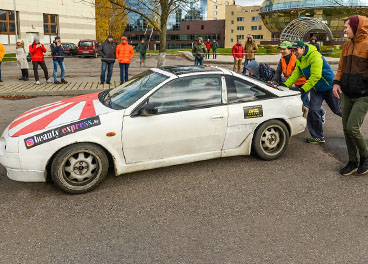
According to the automobile gymkhana rules and standarts, competing groups are divided depending on types of equipment they compete in:
• stock class (factory defaults)
A1 – front-wheel drive with a front-mounted internal combustion engine of a volume < 1.8 liters
A2 – front-wheel drive with a front-mounted internal combustion engine of a volume > 1.8 liters
B1 – rear-wheel drive with a front- or rear-mounted internal combustion engine of a volume < 2.5 liters
B2 – rear-wheel drive with a front- or rear-mounted internal combustion engine of a volume > 2.5 liters
C1 – all-wheel drive with an internal combustion engine of a volume < 2.5 liters
C2 – all-wheel drive with an internal combustion engine of a volume > 2.5 liters
The estimation coefficient for turbocharged engines is +1.8. However and the following restrictions are applying: engine, suspension and chassis are completely stock; the following can be modified: wheels, differential (with limited slip mechanism), zero resistance air filters, brake pads, shock absorber, springs, clutch disc, and muffler (individual sections).
• tuning class (upgraded modifications)
M1 – front-wheel drive
M2 – rear-wheel drive with a front-mounted internal combustion engine
M3 – rear-wheel drive with a rear-mounted internal combustion engine
M4 – all-wheel drive
You can change only 2 parameters on your choice: change the fuel injection system, replace window glass, body parts, panels, brakes, suspension, exhaust system, add an acceleration system (for example, nitrous oxide), lighten the body / add a safety cage.
in street gymkhana all participants compete in one class – U (unlimited) as a rule
there are pno restrictions on the vehicle in such cases ractically but reliability and safety requirements that applied for such races in open areas are much rigorous
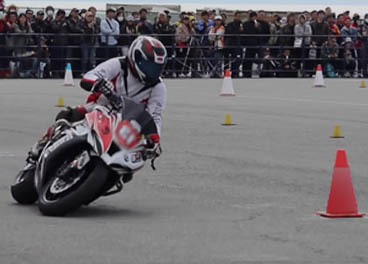
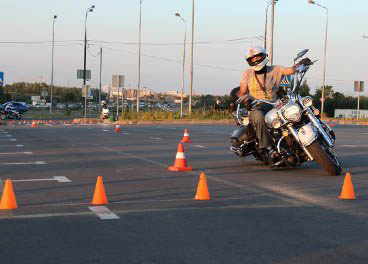
Gymkhana by bike (moto gymkhana, bike gymkhana)
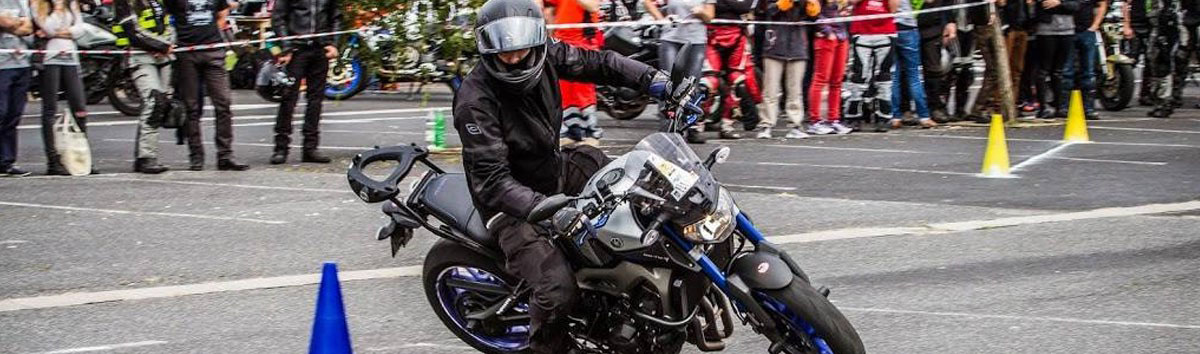
Basic rules: 2 wheels, license plate, street tires with unworn tread, exhaust volume limit of 100 dB, no sharp shapes on protruding parts (steering wheel, levers, pedals, etc.).
Any adjustments are allowed, including replacement of mechanical elements, lightening, etc.
There are no restrictions on motorcycles engine placement for gymkhana acting. Nor are there strict distinctions between motorcycle types (glide, cruiser, tourist, street, enduro, sport, super-sport, scooter).
Protective motorcycle equipment is mandatory for the rider: helmet, gloves, elbow, knee and back protection.
The official "inventor" of gymkhana as a sporting discipline is considered to be the Japanese branch of the International Automobile Federation (Federation Internationale de l'Automobile) – JAF. Belarusian Automobile Federation (BAF) acts as the FIA's representative in the Republic of Belarus; cooperation is underway with the motorsports branch of DOSAAF.
There are several traditional organizers of gymkhana competitions in Belarus. The Belarusian National Championship is held annually, it consists of several stages in different cities across the regions. Some results of such competitions can be ranked in the global ladder of racing drivers. And there are also tables of records for regular configurations in some places for the entire period.
In fact private regulations are prepared separately for each event, but there are also some standards that they are tried to adhere to.
Car and bike motorsports are expensive. Many vehicle owners' clubs and some companies throw private and public training sessions to prepare amateurs and sport team members effectively. Regular test drives assess driving skills and allow participants tune their cars and motorcycles for pre-season rides before competitions.
Some facts about gymkhana
- AUTOSLALOM (GYMKHANA) имеет ряд ассоциативных народных названий: фигурное маневрирование, спортивное маневрирование, фишки, гаражи и другие. Многие часто путают со «скоростным маневрированием» (так называемым TIME ATTACK или TIME TRIAL или SPRINT) – это совершенно другая дисциплина.
- Несмотря на схожие условия победы, gymkhana – полная идеологическая противоположность time attack | time trial | sprint. Траектории включают в себя множество «затычных» мест, средняя скорость редко превышает 40 км/ч, длинные размашистые повороты и прямые участки встречаются крайне редко. Конфигурация практически никогда не закольцовывается, хотя на практике бывают исключения.
- Маневровые конфигурации небольшие, обычно проходятся на первой-второй передаче (и задней, если требуется по заданию). В теории, создатели стараются проектировать их под регламентированное время прохождения – в среднем от одной минуты до полутора. На практике же, бывают конфигурации как до 30 секунд, так и более 2 минут, особенно это касается уличной джимханы (street gymkhana).
- Избежать множества ошибок в техниках вождения помогут хорошие практические навыки дрифтовой школы (drift racing).
- И обратный эффект: маневрирование развивает базовые навыки, полезные в иных дисциплинах – дрифтинг (drifting), ралли (rally sprint), кольцевые гонки (time attack).